

A few years ago, a family brought me a four-year-old spayed German Shepherd named Bella who, in their words, was “ruining their lives.” Bella spun and lunged every time the doorbell rang. She paced at night and could not settle. She had started resource guarding her food bowl from her own family. They had tried working with a board-certified behavioral trainer. They had tried Trazodone prescribed by their primary veterinarian. They had tried calming chews from the pet store. Nothing had worked.
But during our intake, one detail caught my attention: Bella had chronic soft stools. Not quite diarrhea, but never fully formed either. She had been on and off antibiotics multiple times for “colitis.” She was eating a popular grain-free kibble, and her coat was dull and flaky.
That was the case in front of me. The family thought they had a behavioral problem. I thought they had a gut problem expressing itself through behavior.
This is the gut-brain axis in pets, and it is one of the most underutilized tools in integrative veterinary medicine.
What Is the Gut-Brain Axis, Really?
The gut-brain axis describes the two-way communication network linking your pet's digestive system and their brain. It is not theoretical. It is anatomy.
Your pet's gut has more nerve cells than its spinal cord. The technical name for this network is the enteric nervous system, and it functions as a second brain lining the entire gastrointestinal tract. These nerve cells communicate directly with the brain through three main pathways. The vagus nerve is the most important, a direct highway running from the gut to the brainstem. Neurotransmitters are the second pathway, and this is where it gets remarkable: roughly 90 percent of the body's serotonin is produced in the gut, not the brain. The third pathway is the immune system, with approximately 70-80% of immune tissue residing in the gut lining itself.
When the gut is inflamed, leaky, or dysbiotic, meaning bad bacteria outnumbering good, that information travels straight to the brain. The result shows up as anxiety, reactivity, obsessive behavior, and sometimes aggression.
A 2015 review in the Annals of Gastroenterology outlined how the gut and brain communicate via the nervous system, hormones, immune signals, and gut bacteria. These mechanisms are common to all mammals, so findings from human research can meaningfully inform our understanding of dogs and cats. Although research in companion animals is progressing, clinicians practicing integrative medicine have observed this gut-brain pattern for decades.
Bella's Diagnosis Was a Gut Problem
Here is the picture I built for Bella's family.
Bella’s gut was inflamed and leaky, sending continuous distress signals to her brain through the vagus nerve and inflammatory cytokines in her bloodstream. Her serotonin production was almost certainly impaired, and her immune system, embedded in her gut lining, remained on high alert around the clock. From her brain's perspective, the world seemed dangerous, simply because her body was telling her so.
Complicating matters, Bella had been spayed at six months old. Early spaying causes endocrine disruption, which heightens nervous system reactivity and further influences gut health through the gut-hormone axis. This added a second layer we needed to address.
I advised the family to keep her on Trazodone for the time being. We wouldn’t remove her medication while we worked to heal her gut. Instead, we’d coordinate with their primary veterinarian, continue the medication, and plan to reassess in six to eight weeks.
Then we got to work on the gut.
What Healing the Gut Actually Looks Like
Bella's protocol had four parts. I share it not as a prescription, every pet is different, but because pet parents often hear "support gut health" without ever being told what that means in practice.
- Diet. We moved Bella from processed kibble to The Original CrockPet Diet, gently cooked whole foods with rotating proteins, vegetables,. Real food provides the nutrients beneficial gut bacteria need, without the rancid fats, synthetic vitamins, and ultra-processed ingredients that drive inflammation in the gut lining.
- Gut lining repair. We started Bella on slippery elm bark to soothe inflammation and L-glutamine to help restore her intestinal wall. Her owner prepared homemade bone broth daily, batching and freezing portions to provide collagen and glutamine and to further support the healing process.
- Microbiome support. We started with a high-quality, multi-strain probiotic to help rebuild Bella’s bacterial community. As reviewed by Pilla and Suchodolski in 2020, probiotics may not permanently colonize the gut, but they can still aid digestion and foster a healthier gut environment while present. Consistency is key, along with providing the fibers that beneficial bacteria feed on.
- Endocrine support. We used Standard Process Symplex F to help replace some of the hormonal functions Bella’s ovaries would have provided. Most behavioral protocols skip this step, but in early-spay cases, it’s important.
The Outcome
Within two weeks, Bella's stool firmed up. Her owner called me in tears because it was the first time in over a year she had seen normal stool. By week four, the pacing stopped. Bella started sleeping through the night. Her coat regained its shine.
By week eight, the reactivity at the door had dropped by roughly 70 percent. She still alert-barked, but the frantic lunging and spinning were gone. She could be redirected with a simple "leave it."
At three months, her primary veterinarian agreed to wean her slowly off the Trazodone. Bella stayed calm. The resource guarding disappeared entirely. Bella was not unusual. In my thirty-plus years of practice, I have seen this same pattern resolve hundreds of times.
The TCVM Lens — Why Some Pets Are More Vulnerable
When I assess an anxious pet, I consider both Western and Traditional Chinese Veterinary Medicine (TCVM) frameworks. TCVM teaches us that the gut and the mind are not separate systems. The Spleen, which in TCVM means the entire digestive function — is responsible for transforming and transporting nutrients, thoughts, and emotional energy. When digestion falters, dampness and stagnation accumulate. Physically, that shows up as soft stool, gas, and bloating. Energetically, it shows up as obsessive thinking, brain fog, and an inability to settle.
Three constitutional patterns are particularly prone to anxiety:
Fire dogs — Cavaliers, Goldens, and Labradors are Velcro-affectionate, emotionally sensitive, and prone to separation distress and panic. When out of balance, they develop Heart imbalances, and because the Heart is paired with the Small Intestine in Traditional Chinese Veterinary Medicine (TCVM), leaky gut and panic often appear together.
Wood dogs — Border Collies, working-line Shepherds, and Jack Russells are high-drive, determined, and easily frustrated. When Wood is out of balance, these dogs develop Liver Qi stagnation, which can manifest as door reactivity, leash aggression, and inability to settle. This stagnation often “invades” the Spleen and Stomach, leading to digestive upset during times of stress.
Earth dogs – Labs, Beagles, and Basset Hounds are food-motivated, people-pleasing, and prone to chronic worry. When Earth is out of balance, these dogs develop Spleen Qi deficiency, which I estimate occurs in about 70 percent of the anxious pets I see. The body struggles to transform food into usable energy, and the mind has difficulty processing emotional input clearly.
TCVM does not replace the Western view. It complements it. Both frameworks point at the same physical reality: the gut and the nervous system are wired together, and you cannot fix one without addressing the other.
What Disrupts the Gut Most Often
Before adding anything, look at what may already be disrupting your pet's gut. The most common drivers I see in practice are:
Ultra-processed kibble as the only diet. Even premium kibble is heated to temperatures that damage fats, destroy enzymes, and necessitate spraying synthetic vitamins back on after extrusion. Research has consistently shown that diet shapes the gut microbiome more than almost any other factor.
Antibiotics without recovery support. Antibiotics save lives. They also strip beneficial gut bacteria, and without targeted recolonization, the microbiome can take months to rebalance. Most pets are sent home with antibiotics and no probiotics, no bone broth, no support plan.
Early spay and neuter. The endocrine consequences of removing reproductive organs at six months extend into nervous system regulation and gut hormone signaling. I've explored this topic extensively through blogs and educational videos discussing the potential health impacts of early sterilization and considerations for pet parents. Watch my video with Dr. Linda Brent on Spay and Neuter for a deeper understanding of the connection between hormones, behavior, and overall health. This is an evidence-based conversation worth having with your veterinarian, and resources from the Parsemus Foundation, Dr. Karen Becker, and Dr. Peter Dobias are good places to start.
Chronic stress. Ongoing stress impairs digestion by raising cortisol and overstimulating the sympathetic nervous system. This creates a vicious cycle: a pet exposed to chronic stress and gut inflammation can spiral deeper into both physical and emotional distress.
Everyday household toxins. Synthetic air fresheners, conventional cleaning products, lawn chemicals, and unfiltered water all increase the burden on the liver and gut.
Fiber: The Most Underused Tool
Let’s take a closer look at fiber, since pet parents often hear “add fiber” without understanding its purpose or which types are best.
When beneficial gut bacteria ferment fiber, they produce short-chain fatty acids—primarily butyrate, acetate, and propionate. These compounds fuel the cells lining the colon, reduce systemic inflammation, strengthen the gut barrier, signal the vagus nerve, and influence the production of neurotransmitters like serotonin, GABA, and dopamine. In other words, the right fiber nourishes the bacteria that help calm the brain.
Multiple controlled studies in dogs support these findings. Adding fiber from sources like beet pulp, red ginseng, and corn increases microbial diversity, enriches beneficial bacteria, and shifts gut fermentation toward more beneficial, saccharolytic patterns. This produces more short-chain fatty acids and fewer inflammatory byproducts, such as phenols and indoles. A 2024 review in mSystems confirmed a consistent pattern across many studies: fiber reliably alters microbiome composition and activity, improves stool quality, and lowers inflammatory markers.
Here’s what I recommend in practice for an anxious pet:
- Pumpkin (plain purée, not pie filling): one to four tablespoons depending on body size
- Lightly steamed leafy greens or green beans, finely chopped or puréed
- Ground chia seeds: one to two teaspoons
- Cooked and cooled sweet potato, oats, or rice (resistant starch feeds beneficial bacteria)
- For pets with very sensitive or damaged guts: psyllium husk, starting at one-quarter teaspoon per 20 pounds and increasing gradually
Introduce fiber gradually over 7 to 10 days. Increasing fiber too quickly can cause gas and discomfort, potentially worsening anxiety instead of helping it.
A Word on Medication
I am not anti-medication. Trazodone, gabapentin, and fluoxetine can be lifesavers for pets too anxious to function. If your veterinarian has prescribed one of these and your pet is doing well, do not stop the medication without first consulting your veterinarian.
What I push back on is twofold. First, the assumption that medication alone is the answer. If gut inflammation keeps the brain in a state of high alert, medicating only the brain is treating the smoke rather than the fire.
Second, acepromazine. Acepromazine is a sedative, not an anxiolytic. It immobilizes the body without calming the panicked brain, and many pets find this terrifying, feeling everything but unable to move. If your veterinarian has prescribed acepromazine for storm phobia, separation anxiety, or general anxiety, please ask about alternatives. There are far better options.
When Anxiety Needs More Than Gut Support
Gut work is foundational, but it isn’t always enough on its own when:
-
Anxiety escalates to panic, aggression, or self-harm.
-
Behavioral changes appear suddenly in a previously stable pet (which warrants a medical workup for issues like hyperthyroidism in cats, pain from arthritis or dental disease, cognitive dysfunction in seniors, or other underlying causes)
-
Inflammatory bowel disease, pancreatitis, or food-responsive enteropathy is suspected, these conditions require veterinary diagnostics, not just dietary intervention
The integrative approach is always to work with your veterinarian on any necessary medical management, while also addressing the foundations of food, gut, and nervous system health alongside that care.
Where to Start This Week
If you are looking at an anxious pet and wondering where to begin:
-
Change one thing about the diet. Add real food. Even partially replacing kibble with gently cooked whole foods makes a measurable difference within two to three weeks.
-
Start fiber slowly. A tablespoon of plain pumpkin per meal for a medium-sized dog is a safe starting point.
-
Add a quality probiotic. Look for multi-strain pet-specific formulas with named strains and clearly listed CFUs.
-
Make bone broth. Homemade, low-sodium, simmered with bones for 12 to 24 hours. It is one of the most powerful and least expensive gut-healing tools available.
-
Audit the environment. Filtered water, fragrance-free cleaners, and a steady routine all reduce the load on the gut.
Behavioral improvement, in my experience, follows digestive improvement by two to four weeks. Stool quality usually changes first. Sleep and reactivity follow.
Still Have Questions About Your Pet's Gut and Anxiety?
The Pet Guardian Circle hosts live monthly Q&A sessions with me and our certified Holistic Pet Health Coaches. Bring your real questions about gut health, anxiety protocols, diet transitions, and TCVM.
Monthly live Q&A · Member community · Expert coach talks
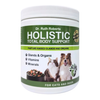
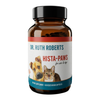
Shop: Foundational Support for Gut and Calm
Research Sources and References
Bhosle A, et al. "Response of the gut microbiome and metabolome to dietary fiber in healthy dogs." mSystems. 2024.
Carabotti M, et al. "The Gut-Brain Axis: Interactions Between Enteric Microbiota, Central and Enteric Nervous Systems." Annals of Gastroenterology. 2015.
Liang D, Zhao S, & Yin G. "Dietary supplementation with soluble corn fiber improved fecal score, microbiota, and SCFAs in dogs." Frontiers in Veterinary Science. 2025.
Montserrat-Malagarriga M, et al. "The Impact of Fiber Source on Digestive Function, Fecal Microbiota, and Immune Response in Adult Dogs." Animals. 2024.
Pilla R, Suchodolski JS. "The Role of the Canine Gut Microbiome and Metabolome in Health and Gastrointestinal Disease." Frontiers in Veterinary Science. 2020.
Song H, et al. "Red Ginseng Dietary Fiber Shows Prebiotic Potential by Modulating Gut Microbiota in Dogs." Microbiology Spectrum. 2023.
Yano JM, et al. "Indigenous Bacteria from the Gut Microbiota Regulate Host Serotonin Biosynthesis." Cell. 2015.