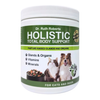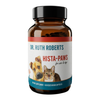


If last week's piece on recognizing pain in dogs and cats left you wondering what to actually do about the stiffness or seasonal flare-ups you noticed, this is the next step. We go deeper here into specific herbs, targeted supplementation, and the often-overlooked link between gut health and how much inflammation your pet's body is carrying around.
Natural anti-inflammatory supplements for dogs and cats have become one of the most common questions I hear from pet parents, usually right after they've noticed their dog slowing down on walks or their cat hesitating before a jump that used to be effortless. There is real, useful research behind several of the options people ask about most: turmeric, Boswellia, ginger, and omega-3 fatty acids. There is also a bigger picture worth understanding first, since supplements are only one piece of a plan that starts with what is actually in your pet's bowl.
- Why We're Going Deeper on Anti-Inflammatory Support
- Whole Food Nutrition and the Inflammation Connection
- Three Herbs Worth Knowing: Turmeric, Boswellia, and Ginger
- Omega-3s for Joint and Soft Tissue Support
- A TCVM Lens: Food Energetics for Inflammation
- The Gut-Pain Connection
- A Practical Starting Point
- When Conventional Care Belongs in the Plan
- What This Looked Like in My Practice
- Frequently Asked Questions
- References
Why We're Going Deeper on Anti-Inflammatory Support
Our earlier piece on an anti-inflammatory diet for dogs and cats with arthritis covered the bigger picture: why whole foods tend to lower a pet's everyday inflammatory load compared with heavily processed dry kibble, and how that shift can support a dog or cat already managing joint pain.
This piece goes further into three areas pet parents ask about most: which herbs actually have research behind them, how omega-3 fatty acids fit into a joint-support plan, and why so many of the chronic pain cases I see in practice trace back, at least in part, to the gut.
Whole Food Nutrition and the Inflammation Connection
Fresh, minimally processed meals, whether home-cooked or a quality wet food, tend to carry a lower inflammatory load than heavily processed dry kibble for a lot of the dogs and cats I see. Kibble is cooked at high heat, sometimes more than once between ingredients and final extrusion, and many formulas lean on carbohydrate fillers that do a pet's joints no favors once weight starts to creep up.
That is not the same as saying every pet on kibble is in trouble or that every home-cooked bowl is automatically better. Some pets do well on a quality kibble. Some home-cooked diets are poorly balanced and cause more problems than they solve. What matters is an honest conversation with your veterinarian or a nutrition-focused practitioner about what is actually in the bowl and whether it fits your particular dog or cat, especially when joint pain or stiffness is already part of the picture.
Rotating two or three protein and vegetable combinations, rather than feeding the exact same bowl every single day, tends to lower the odds that any one ingredient quietly becomes a source of irritation over months and years.
Three Herbs Worth Knowing: Turmeric, Boswellia, and Ginger
These three herbs come up constantly in integrative veterinary practice, and they have earned that reputation differently. Here is what the current research actually shows, and where the honest gaps still are.
Turmeric (Curcuma longa)
Turmeric, and specifically its active compound curcumin, is probably the herb pet parents ask about most. A 2026 trial published in Frontiers in Veterinary Science followed dogs with naturally occurring osteoarthritis for six weeks, comparing a turmerosaccharide-enriched Curcuma longa extract against a standard glucosamine and chondroitin combination. Both groups improved on veterinarian and owner assessments, and the curcumin group showed a meaningful reduction in pain and lameness by day 28, with the extract well tolerated and no adverse events reported over the study period.[1]
That is a modest-sized trial, and it compared curcumin against another supplement rather than a placebo, so it is not the last word on the subject. It does line up with what I see clinically: turmeric, dosed appropriately and paired with a fat source to help the body absorb it, is a reasonable place to start for a dog or cat carrying extra inflammation in the joints.
Turmeric can have a mild blood-thinning effect. Talk with your veterinarian before adding it if your pet already takes a blood thinner, has surgery coming up, or has a history of gallstones.
Boswellia (Boswellia serrata)
Boswellia serrata, sometimes called Indian frankincense, works through a different anti-inflammatory pathway than turmeric, which is part of why the two are so often paired. A randomized, double-blinded trial published in PLOS ONE combined a Boswellia and Curcuma extract with a standard joint nutraceutical in dogs with osteoarthritis and measured actual weight-bearing forces on a force plate rather than relying only on owner impressions. The combination group showed a statistically significant increase in how much weight dogs were willing to put on the affected limb, with the improvement described as more pronounced two months after treatment ended than during it.[2]
In my own practice, when I introduce Boswellia, we start conservatively and adjust based on how the individual pet responds, working from body weight rather than assuming a human dose translates directly to a 20-pound dog or an 8-pound cat.
Ginger (Zingiber officinale)
Ginger has a long history of traditional use for nausea and inflammation in both human and veterinary herbal medicine, and it shows up often in integrative protocols for pets whose joint stiffness comes paired with an unsettled stomach. The controlled research in dogs and cats specifically is thinner than what exists for turmeric or Boswellia, so I tend to treat it as a supportive addition rather than a primary anti-inflammatory tool.
Veterinary hospital resources caution that ginger can interact with blood thinners and certain anti-inflammatory medications, and it is generally avoided in pets with bleeding disorders or gallbladder disease.[3] There is no single dose that fits every dog or cat, so this is one to run by your vet before adding it, particularly if your pet already takes a joint medication.
Omega-3s for Joint and Soft Tissue Support
Omega-3 fatty acids, specifically EPA and DHA, have more research behind them in dogs than any other joint-focused supplement on this list. A multicenter study published in the Journal of the American Veterinary Medical Association followed 127 dogs with osteoarthritis across 18 veterinary practices for six months, comparing a standard diet against one with a substantially higher omega-3 content. Dogs eating the omega-3-enriched food showed measurably higher blood omega-3 levels and lower arachidonic acid, an inflammatory fatty acid, and owners reported improvement in rising from rest and in play behavior within the first six weeks.[4]
Source matters here. In my practice, I favor a fish-based or calamari-based omega-3 over a plant source like flaxseed, because dogs and cats convert plant-based omega-3 into usable EPA and DHA quite inefficiently. Our Omega Pawz formula uses a marine source for that reason, and it is one of the more straightforward additions for helping support normal joint comfort and a healthy skin barrier alongside the rest of a pet's plan.
Looking for a straightforward place to start?
Our Bone & Joint Support collection gathers the marine-based omega-3, turmeric, and Boswellia options we reach for most often in practice.
Shop Omega PawzA TCVM Lens: Food Energetics for Inflammation
Traditional Chinese Veterinary Medicine offers a different, complementary way of thinking about inflammation, through the lens of food energetics. Foods are considered warming, neutral, or cooling based on the effect they tend to have on the body, and pets showing heat signs, warm joints, restlessness, seeking cool floors, a red or lavender-tinged tongue, often do better on a diet weighted toward cooling proteins and vegetables.
Cooling Choices
- Rabbit, duck, whitefish, pork
- Cucumber, celery, spinach
- Watermelon (in small amounts)
- Bok choy, napa cabbage
Warming Choices
- Lamb, venison, chicken
- Ginger, in small culinary amounts
- Squash, sweet potato
- Best suited to pets that run cold
The Gut-Pain Connection
A body dealing with ongoing inflammation almost never has it contained to one system, and the gut is usually more involved than pet parents expect. Gut microbial activity shapes immune regulation and inflammatory signaling throughout the body, not only in the digestive tract. A 2024 review in Animal Frontiers describes gut microbial metabolites, short-chain fatty acids, bile acids, and neurotransmitters among them, as a common thread connecting digestive health, immune function, and even behavior in dogs and cats.[5]
This is why, in my practice, a pet whose joint pain is not responding as expected often gets a look at gut health alongside the orthopedic picture. I support the microbiome through whole food fiber, pumpkin, leafy greens, cooked-and-cooled resistant starches like rice or potato, and psyllium when a pet needs more, rather than a generic prebiotic supplement, since whole food sources tend to feed a broader range of beneficial bacteria. For a pet whose gut lining itself needs extra support, our Digest Ease formula was built around L-glutamine specifically for that purpose.
We go deeper into this whole connection in our piece on the gut-brain axis in pets, worth a look if your dog or cat's inflammation seems to travel alongside digestive upset or mood changes.
A Practical Starting Point
None of this needs to happen at once, and I would actually caution against trying. A pet's gut and metabolism tend to adjust better to one or two changes at a time, given a couple of weeks before the next addition.
- Pick one whole-food swap first, such as a fresh food topper two or three times a week, rather than overhauling the whole bowl at once.
- Add a marine-based omega-3 at a dose your veterinarian confirms is right for your pet's weight and health history.
- Introduce turmeric or Boswellia, not both at once, so you can actually tell which one is helping.
- Give any new addition two to four weeks before deciding whether it is making a difference.
- Keep a simple weekly note on mobility, stool quality, and appetite, since patterns matter more than any single day.
Natural does not mean risk-free. Herbs and supplements can interact with medications and existing conditions, and more is not automatically better. Loop your veterinarian in before adding anything new, especially if your pet already takes daily medication.
When Conventional Care Belongs in the Plan
Food and supplement changes support a pet's overall resilience. They are not a stand-in for a veterinary-guided pain management plan, and I want to be direct about that. A dog who is limping acutely, refusing to bear weight, or showing a sudden change in behavior needs a veterinary exam first, not a supplement trial.
For pets with diagnosed osteoarthritis or another inflammatory condition, prescription pain relief and anti-inflammatory medication, when your veterinarian recommends them, are doing important work: keeping your pet comfortable enough to move, eat, and rest normally while a whole-body approach does its slower work in the background. In my experience, the two approaches do not compete with each other when they are coordinated through your vet.
Natural anti-inflammatory support and conventional veterinary care work well together. The strongest plans I see use both, with your veterinarian coordinating the whole picture.
What This Looked Like in My Practice
A 9-year-old mixed-breed dog in my practice was managing noticeable joint stiffness and seasonal flare-ups while recovering from an intensive course of veterinary treatment for an underlying infection. Her family was already supporting her gut and immune health with whole-food nutrition and a targeted probiotic protocol, working closely with her regular veterinarian throughout. When we layered in a marine-based omega-3 and a curcumin supplement, her mobility improved noticeably within a few weeks. Boswellia, dosed conservatively for her size, gave her extra support on the days pollen counts were highest, and a pulsed electromagnetic field therapy loop became part of the routine on her toughest days.
None of what we added replaced the treatment that got her through the infection itself. It built the resilience that let her bounce back once the acute crisis had passed, and her family still points to that combination when they talk about how quickly she returned to her normal walks.
Want to learn to build whole-body plans like this one?
Our Holistic Pet Health Coach certification teaches the root-cause, whole-body approach behind cases like the one above, alongside veterinary care rather than in place of it.
Explore the HPHC Certification- Is Your Pet in Pain? How to Recognize the Signs
- An Anti-Inflammatory Diet for Dogs and Cats With Arthritis
- The Gut-Brain Axis in Pets
- Movement and rehabilitation for pets (Week 3, publishing soon)
Frequently Asked Questions
Is turmeric safe for dogs with joint pain?
Turmeric is generally well tolerated by most dogs when dosed appropriately and given with a source of fat to help the body absorb it. It can have a mild blood-thinning effect, so check with your veterinarian first if your dog takes blood thinners, has upcoming surgery, or has a history of gallstones.
How much ginger can I give my dog?
There is no single dose that fits every dog, since it depends on size, health history, and what else your dog is taking. Because ginger can interact with blood thinners and some anti-inflammatory medications, the safest approach is asking your veterinarian for an amount suited to your dog's weight and health picture rather than following a generic online chart.
What is TCVM food energetics?
Food energetics is a Traditional Chinese Veterinary Medicine concept that groups foods as warming, neutral, or cooling based on the effect they tend to have on the body. Pets showing signs of heat, such as warm joints, restlessness, or a red-tinged tongue, often do better weighted toward cooling proteins and vegetables, while pets that run cold may do better with warming choices.
Does gut health affect inflammation in pets?
Yes, in a meaningful way. The gut microbiome helps regulate immune activation and inflammatory signaling throughout the body, not only in the digestive tract, so supporting gut health is often part of a whole-body approach to a pet's joint or skin inflammation.
| [1] | Tripathi SD, Suresh S, Khangal P, Sasi Kumar M, Nandini HS. "Protective effects of turmerosaccharides rich extract of Curcuma longa L. in osteoarthritic dogs." Frontiers in Veterinary Science, 2026;13:1536366. pmc.ncbi.nlm.nih.gov/articles/PMC13041522 |
| [2] | Caterino C, Aragosa F, Della Valle G, Costanza D, Lamagna F, Piscitelli A, Nieddu A, Fatone G. "Clinical efficacy of Curcuvet and Boswellic acid combined with conventional nutraceutical product: An aid to canine osteoarthritis." PLOS ONE, 2021;16(5):e0252279. journals.plos.org/plosone |
| [3] | VCA Animal Hospitals. "Ginger." Client education resource on herbal supplement safety and drug interactions in dogs and cats. vcahospitals.com/know-your-pet/ginger |
| [4] | Roush JK, Dodd CE, Fritsch DA, et al. "Multicenter veterinary practice assessment of the effects of omega-3 fatty acids on osteoarthritis in dogs." Journal of the American Veterinary Medical Association, 2010;236(1):59-66. pubmed.ncbi.nlm.nih.gov/20043800 |
| [5] | Rindels JE, Loman BR. "Gut microbiome, the key to our pets' health and happiness?" Animal Frontiers, 2024;14(3):46-53. doi.org/10.1093/af/vfae015 |
This information is for educational purposes and is not a substitute for personalized veterinary care. Always consult your veterinarian before making changes to your pet's health routine. Natural remedies are not automatically risk-free, and any diet change is best made gradually.